Last updated November 22, 2026
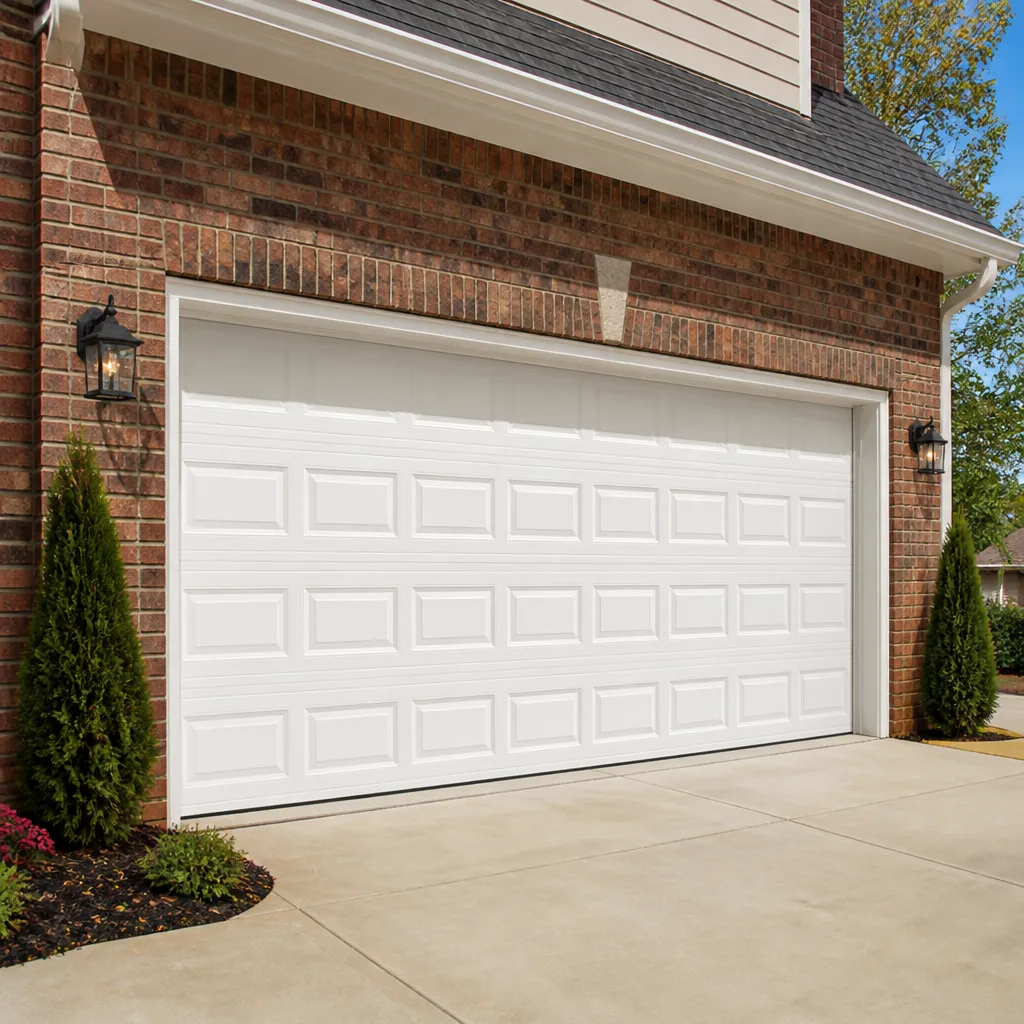 Raised-panel steel
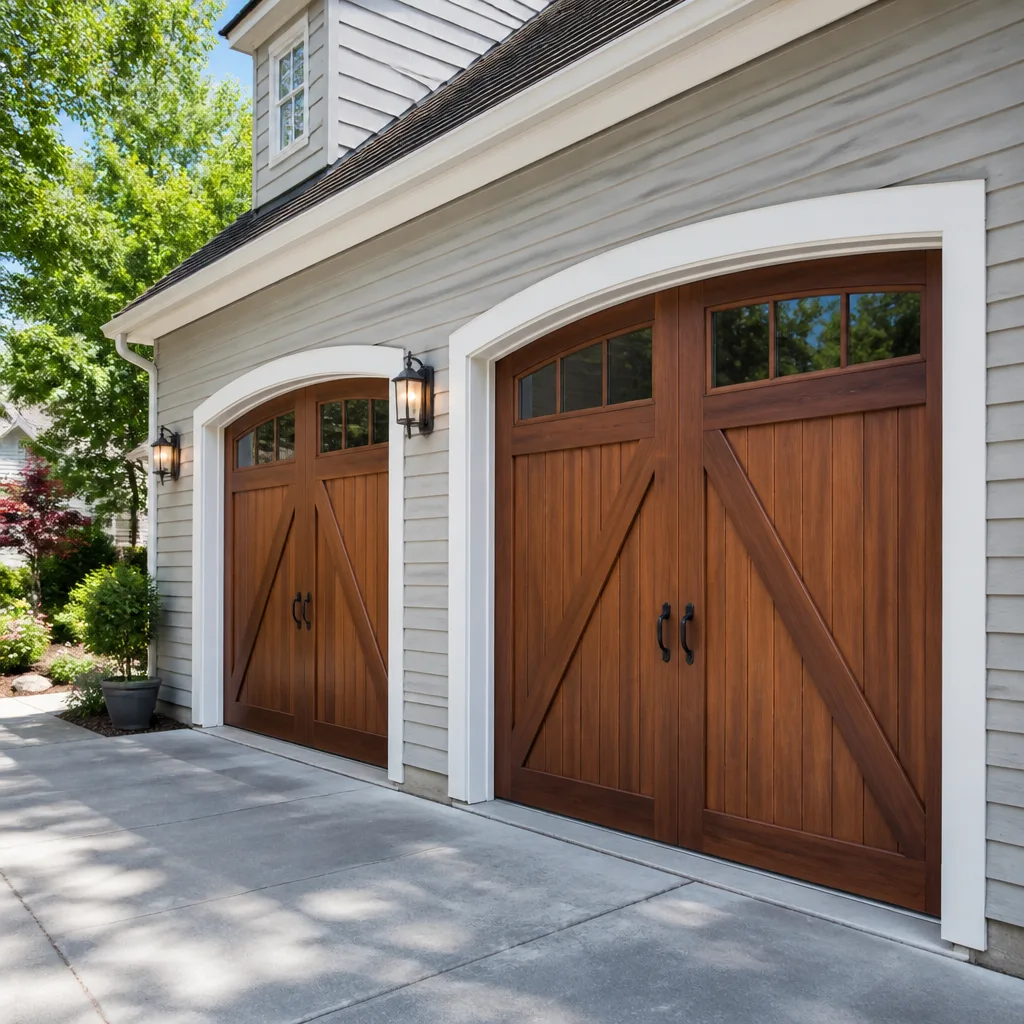 Carriage house
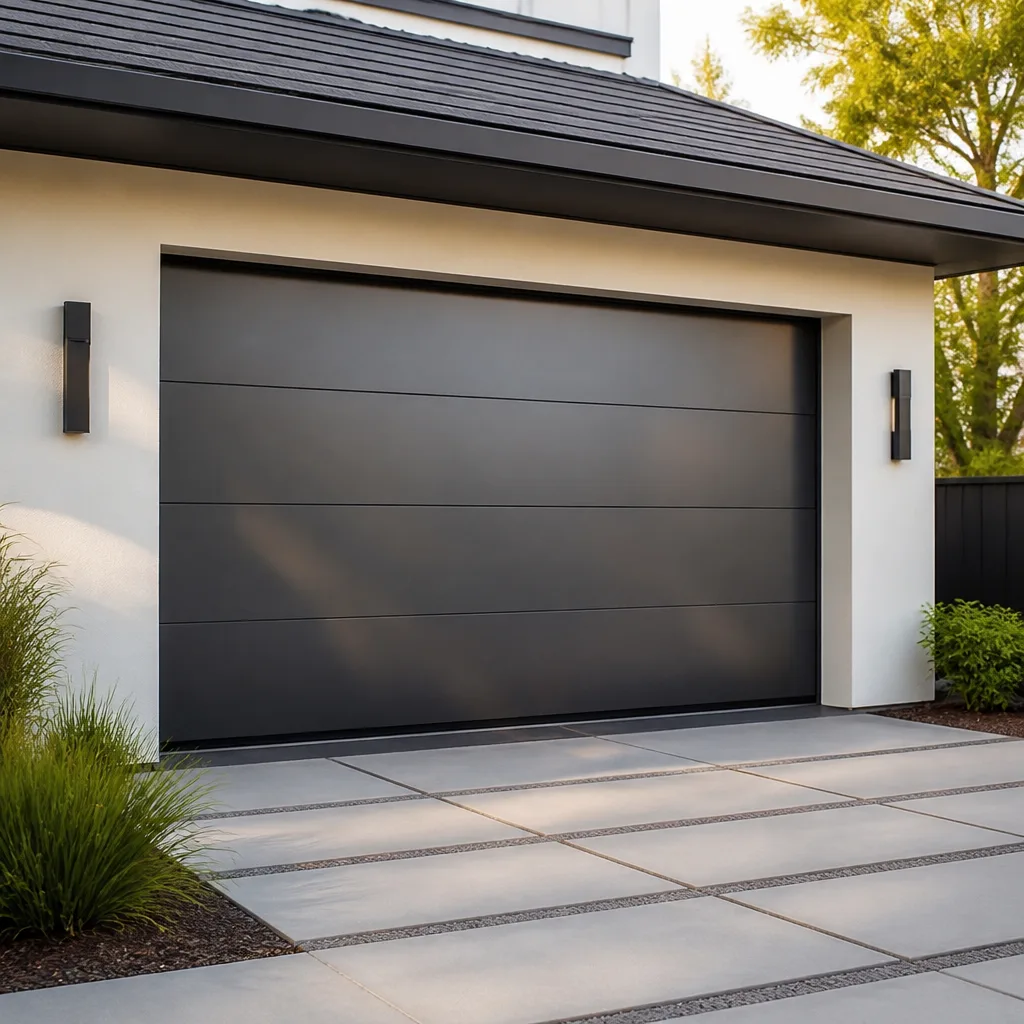 Modern flush
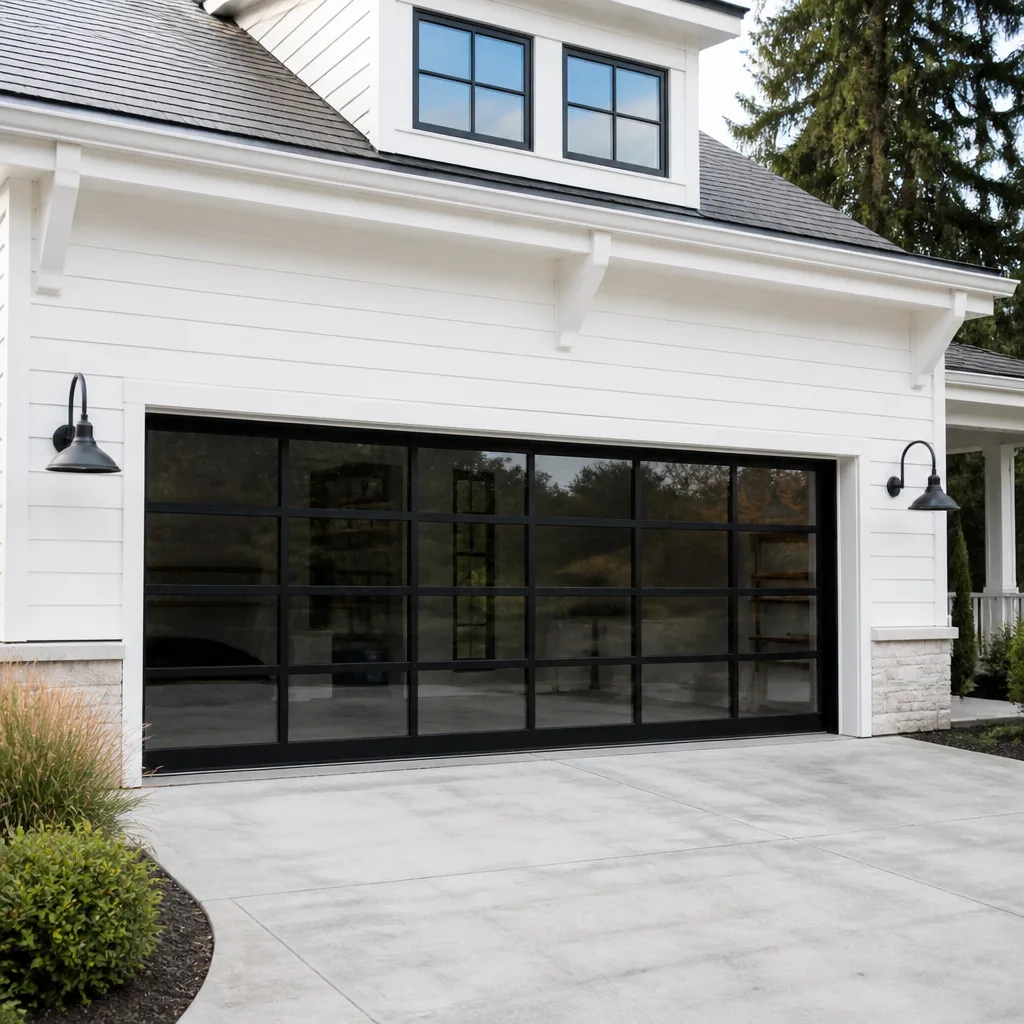 Full-view glass
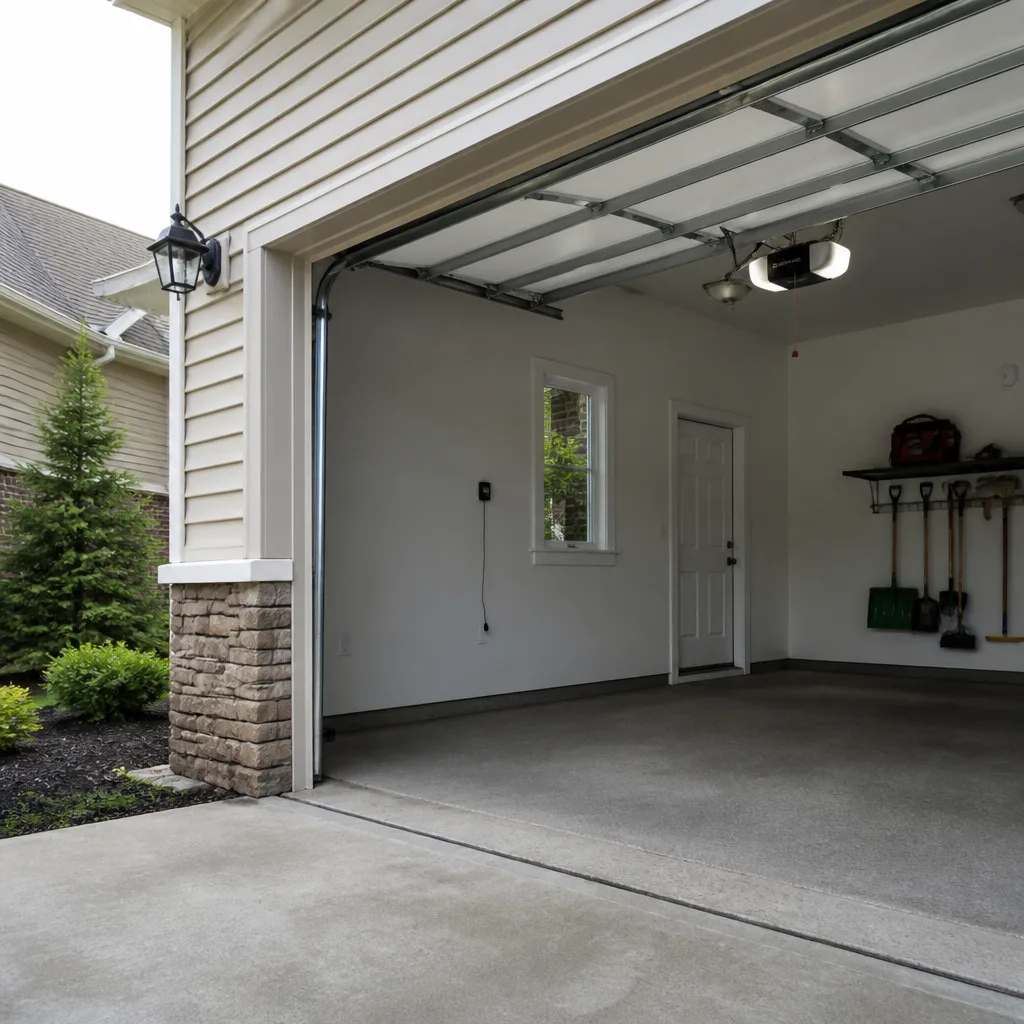 LiftMaster openers
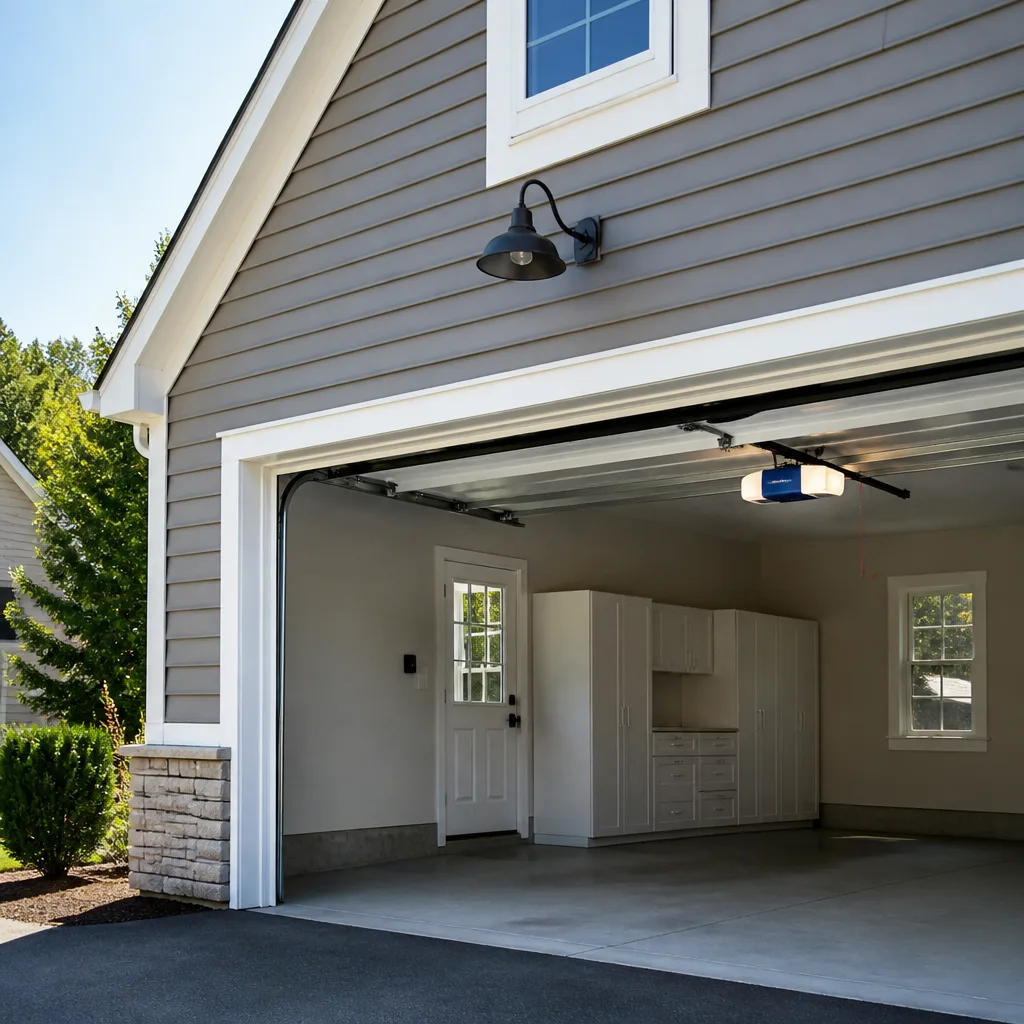 Chamberlain openers
Full 25-point door and opener safety check with every visit - springs, cables, rollers, tracks, and your LiftMaster or Chamberlain opener included
You get a price before we start. It does not change when the pro arrives.
Get your free estimateGarage Door Warning Signs: A Laurel Homeowner’s Reference Guide
Most garage door warning sign guides tell you what you can already see and hear. This one is different. We’re going to focus on the signals that are easy to dismiss, the ones that look minor but tend to show up right before the expensive failures. A door that hesitates for half a second before it moves isn’t “getting old.” It’s a motor working against a mechanical resistance problem, and that resistance is measurable. In our experience across Laurel, the homeowners who catch these quiet signals early spend far less than the ones who wait for a loud bang. Here’s what to watch for, and what each sign actually means.
Quick Answer
The garage door warning signs that matter most in Laurel are the ones you can’t easily see: a door that hesitates before moving, an opener that runs longer per cycle, a reversing door that gets blamed on the sensors, and rust patterning on torsion bar hardware. These subtle signals point to spring, cable, and load problems that precede the most serious failures. Visible cracks and loud noises are late-stage symptoms. The earlier signs are quieter, and catching them early is what keeps a simple adjustment from turning into a cable-and-drum replacement.
Styles & brands we work with
- Raised-panel steel
- Carriage house
- Modern flush
- Full-view glass
- LiftMaster openers
- Chamberlain openers
Table of Contents
- Three Sounds That Point to Different Failures
- The Manual Balance Test for Spring Tension
- Why a Reversing Door Is Rarely a Sensor Problem
- Rust Patterning on Older Laurel Hardware
- The Long-Cycle Opener Sign
- Visual Checks You Can Do in Two Minutes
- Common Mistakes to Avoid
- When to Call a Professional
- Frequently Asked Questions
The Difference Between Normal Sounds and Three Acoustic Signatures
Every garage door makes noise. The question is which noise. A well-adjusted door produces a steady, consistent rumble from beginning to end of travel. When that rumble changes character, the type of sound tells you which component is failing. This is one of the most useful diagnostic skills a homeowner can develop, because you can hear these changes long before anything breaks.
Here are the three acoustic signatures we listen for, and what each one points to:
- Grinding. A metallic grinding sound usually points to worn rollers or a torsion bar bearing that’s running dry. It’s a friction issue. Left alone, the friction transfers load to the opener and shortens its life.
- Popping. Sharp pops during travel often mean a torsion spring is winding unevenly or a cable has jumped its drum. This one deserves prompt attention because it’s the sound that tends to come right before a spring lets go.
- Rhythmic scraping. A repeated scrape once per revolution points to a bent track, a misaligned roller, or a panel that’s rubbing. It’s rarely an emergency, but it wears the door and eventually creates a jam.
In Laurel’s older detached garages, we hear the grinding and popping signatures most often. Many of these doors have decades on their original bearings and springs, and the hardware simply accumulates wear. If you can name the sound, you can describe the problem accurately when you call for garage door repair, which saves diagnostic time and gets you to the right fix faster.
How to Perform a Manual Balance Test (and What It Reveals)
A manual balance test is the single most useful check a homeowner can run, because it measures spring tension before that tension causes asymmetric wear or a sudden drop. Springs, not the opener, do the actual lifting on most doors. When they lose tension unevenly, the door starts working out of balance, and every other component pays the price.
Here’s the safe way to run the test, observing the caveat below:
- Close the door completely and disconnect the opener using the manual release pull cord. On most openers this is a rope with a handle that hangs from the trolley.
- Lift the door about halfway by hand, using the bottom handle or a firm grip on the lowest panel. Do not force it.
- Let go gently and watch what happens. A balanced door holds its position roughly where you left it.
- If the door drops on its own, the springs have lost tension. If it rises on its own, the springs are over-tensioned.
- Reconnect the opener only after the door is closed.
If the door drops or rises under its own weight, that’s a spring tension problem, and it’s the kind of thing to have checked rather than adjusted yourself. Torsion springs are under significant stored force, and the adjustment process is one of the genuinely dangerous jobs in home maintenance. A trained technician measures and rebalances them safely. Run the balance test as a check, never as a repair.
Why a Reversing or Mid-Travel Stopping Door Is Rarely a Sensor Problem
When a garage door reverses or stops partway through its travel, most homeowners assume a sensor is misaligned. It’s the most publicized cause, so it gets blamed first. In our experience, reversing and mid-travel stopping are more often spring or cable tension problems. A door fighting resistance from a slack cable or a sprung spring “feels” an obstruction, and the safety reverse system triggers just as it would for a real object in the path.
This misdiagnosis leads to unnecessary sensor replacements. The sensors get moved, cleaned, or replaced, the door works for a few cycles, then the same reversing returns because the actual cause was never addressed. If your door reverses intermittently and the sensors look clean and aligned, look elsewhere first.
The way to tell the difference:
- If the door reverses at the same spot every time, that’s mechanical, not sensor-related.
- If the safety LEDs on the sensors are solid (not blinking), the sensors are likely fine.
- If the door reverses only when it’s cold, that points to a spring problem.
- If the door reverses at random spots with no pattern, sensor misalignment is a reasonable suspect.
If the door reverses reliably at the same place, a garage door spring repair visit is where to start. A technician can confirm whether the spring or cable is the actual cause in minutes. Getting the diagnosis right is the whole game here.
Rust Patterning on Older Laurel Housing Stock: What It Tells You
Laurel has a lot of housing from the mid-20th century forward, and that stock has something in common: many of these doors are still running on original or first-replacement torsion hardware. Rust on that hardware is a meaningful diagnostic. It doesn’t just tell you the metal is old. The distribution of the rust tells you roughly how close the hardware is to failing.
Here’s how to read it:
- Light surface rust at weld points and the bracket edges. Cosmetic. The hardware still has life in it. Wipe it down and monitor.
- Rust concentrated at about 60 percent stage. You’re seeing rust that’s spread beyond welds into the drum edges and the bearing plates, with orange staining but no flaking. The metal is thinning and the bearing is dry. This is the point to have hardware inspected.
- Rust at about 80 percent stage. Heavy scaling, flaking, and pitting along the torsion bar and the stationary bearing plates. The metal has lost cross-section. At this stage the torsion bar itself is at risk, and a snap can send debris with force.
If you see the 80 percent patterning, stop using the door. Get it evaluated before the next cycle. This kind of rust reading is one place where a Laurel-specific check pays off, because the local housing stock runs older than in newer construction areas. When you know you’re looking at late-stage rust, the sensible next step is to schedule a proper garage door repair evaluation rather than keep cycling the door and hoping.
The Long-Cycle Opener Sign Most Homeowners Misread
Here’s the electrical sign that surprises people: an opener that runs longer than usual per cycle. The door used to open in eight seconds; now it takes twelve. Homeowners assume the remote battery, the wall switch, or the opener itself. It’s almost always the door’s mechanical load.
When resistance increases, the opener has to work harder and longer to complete the same travel. That extra load comes from a combination of things: weakened springs, worn rollers, a track that’s slightly out of line, a cable that’s started to drag. The opener is doing exactly what it’s supposed to do. It’s telling you the door is getting heavier.
How to tell it’s a load problem and not an opener problem:
- Time a normal full cycle with a stopwatch. Note it.
- Disconnect the opener and try to lift the door by hand from the closed position.
- If the door feels noticeably heavy, the load has increased and the opener isn’t the problem.
- Check that the opener’s travel limits haven’t drifted. Some openers need a limit re-set occasionally.
If the door feels heavy in a manual test and the opener is running long, the work is on the door, not the opener. That said, a long-cycling opener paired with other symptoms can also indicate an opener that’s aging out, which is where a garage door opener repair inspection helps sort out whether to fix the opener or the door hardware. In Laurel, doors that run long-cycle through the winter months are a common call, and the fix is usually hardware, not electronics.
Visual Checks You Can Do in Two Minutes
You don’t need tools for most of the important visual checks. Walk around the door, look carefully, and you’ll catch most of what matters. These are the ones we’d walk first:
- Cable condition at the drums. Look at the cables that spool at the top corners. Any fraying, kinking, or loose wrapping is a stop-and-call situation.
- Spring color and shape. A torsion spring that’s stretched, visibly sagging, or shows separation between windings is past its service life. A single broken spring will often look like a clean break, but a tired spring never does.
- Rollers in tracks. Worn rollers can be identified by looking at the track from the side: the door should ride straight, not lean at the corners.
- Panel alignment. Gaps between panels, sagging panels, or panels that sit off-plumb are usually a sign that the door’s balance is off or hinges are worn.
- Weatherstripping. A sagging bottom seal lets in moisture, ice, and small animals, which stresses the door in a different way.
A quick visual sweep every few months catches most of these before they cascade. The garage door is the largest moving object in most homes. A two-minute look a few times a year is genuinely worth the time.
Brand-Specific Notes for Laurel Doors
Laurel homes run a wide spread of door and opener brands. When you call a specialist, brand awareness matters for diagnosis because different systems have different failure patterns and different parts. We work on the brand you already have, and that includes the common systems we see daily.
A few notes on brands you may find on your home:
- Genie and LiftMaster openers. Long-cycle symptoms on these units often turn out to be door load, not opener electronics. The seniors in the Genie line and the belt-drive LiftMaster units are robust internally, but each has travel-limit quirks worth knowing.
- Clopay and Amarr doors. Both brands are common in Laurel residential builds. Panel wear and roller issues on these are often at the bottom panel, where the door takes the most load.
- Wayne Dalton doors. Some Wayne Dalton models use torque-master and similar tension systems that aren’t standard torsion. These need the brand-specific approach; not every technician has seen them.
When the door or opener is one of these and symptoms are ambiguous, matching the fix to the actual brand is what makes the difference between a fix and a repeat call. That’s a specific reason to call a company with Laurel Garage Door Repair Pros rather than a general handyman. The right fix for your specific system isn’t a generic fix.
See the difference
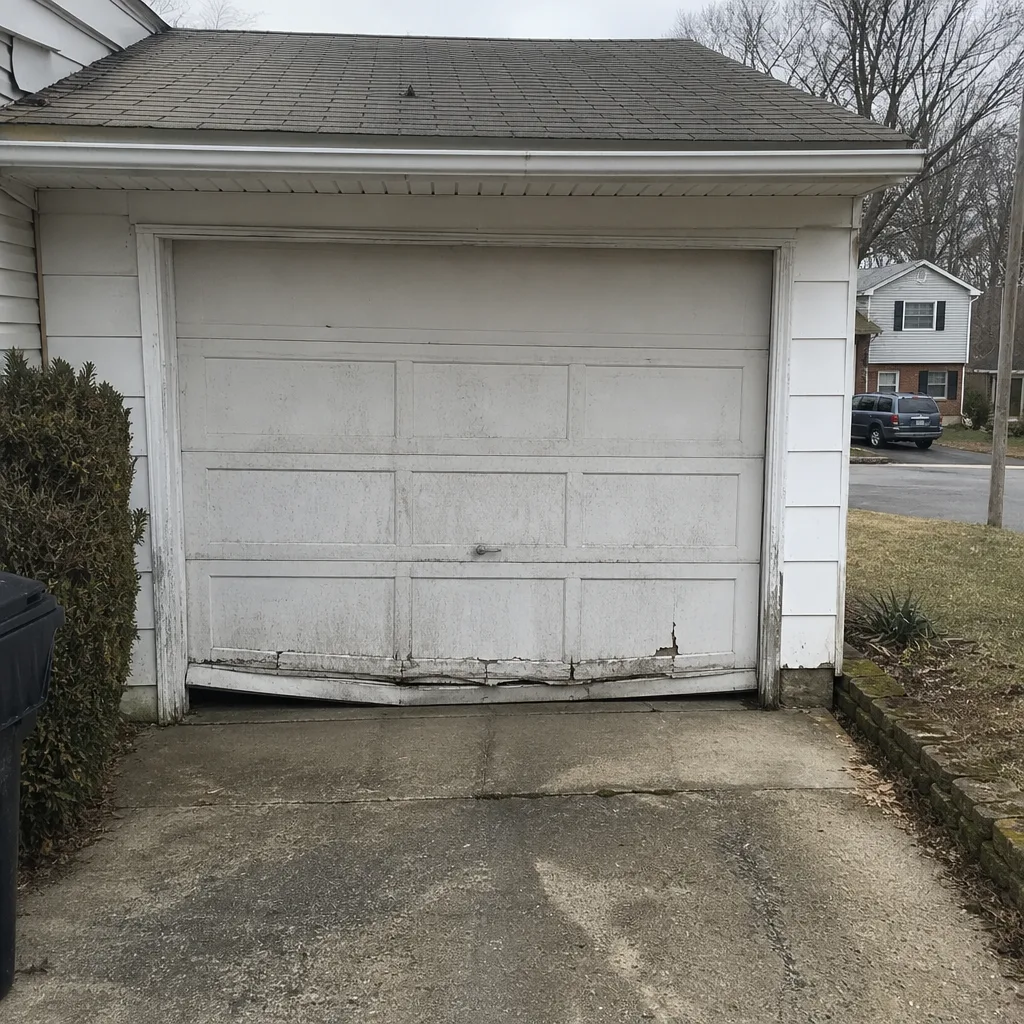 Before
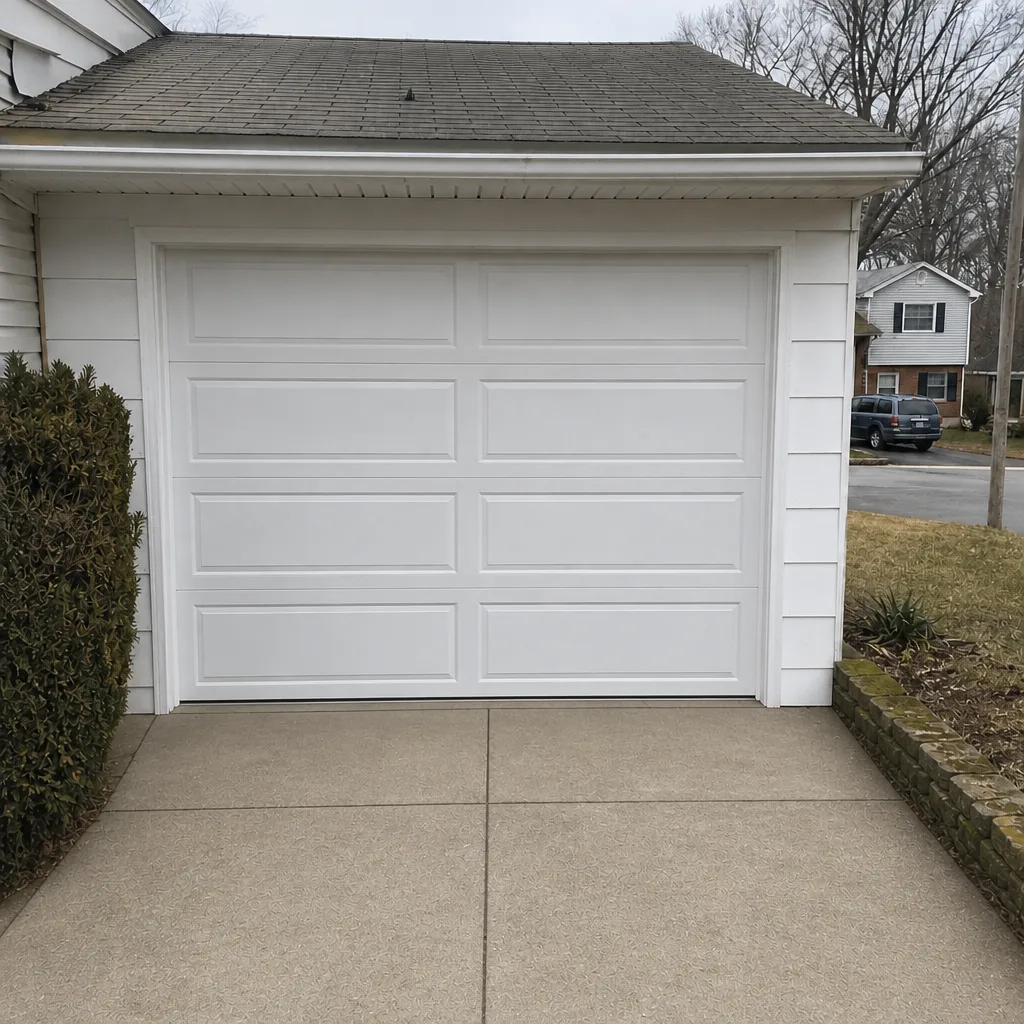 After
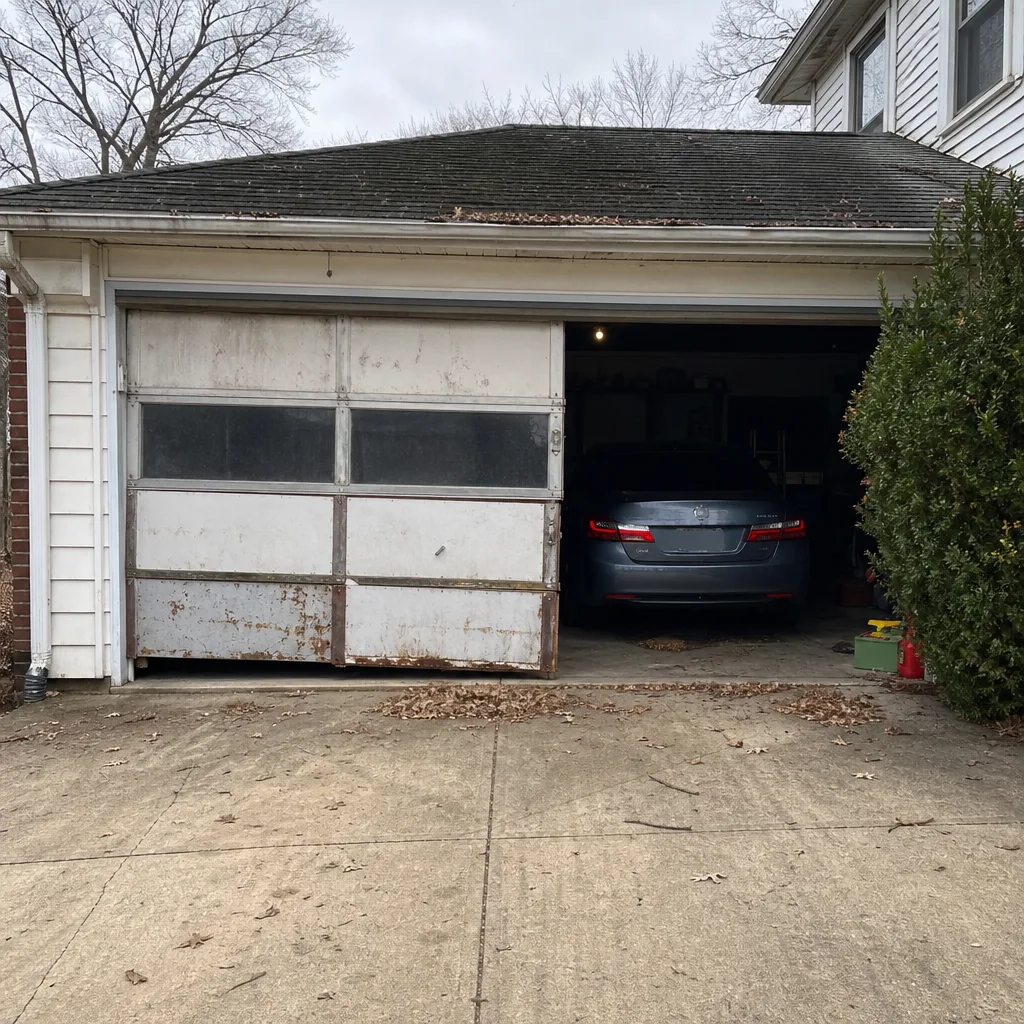 Before
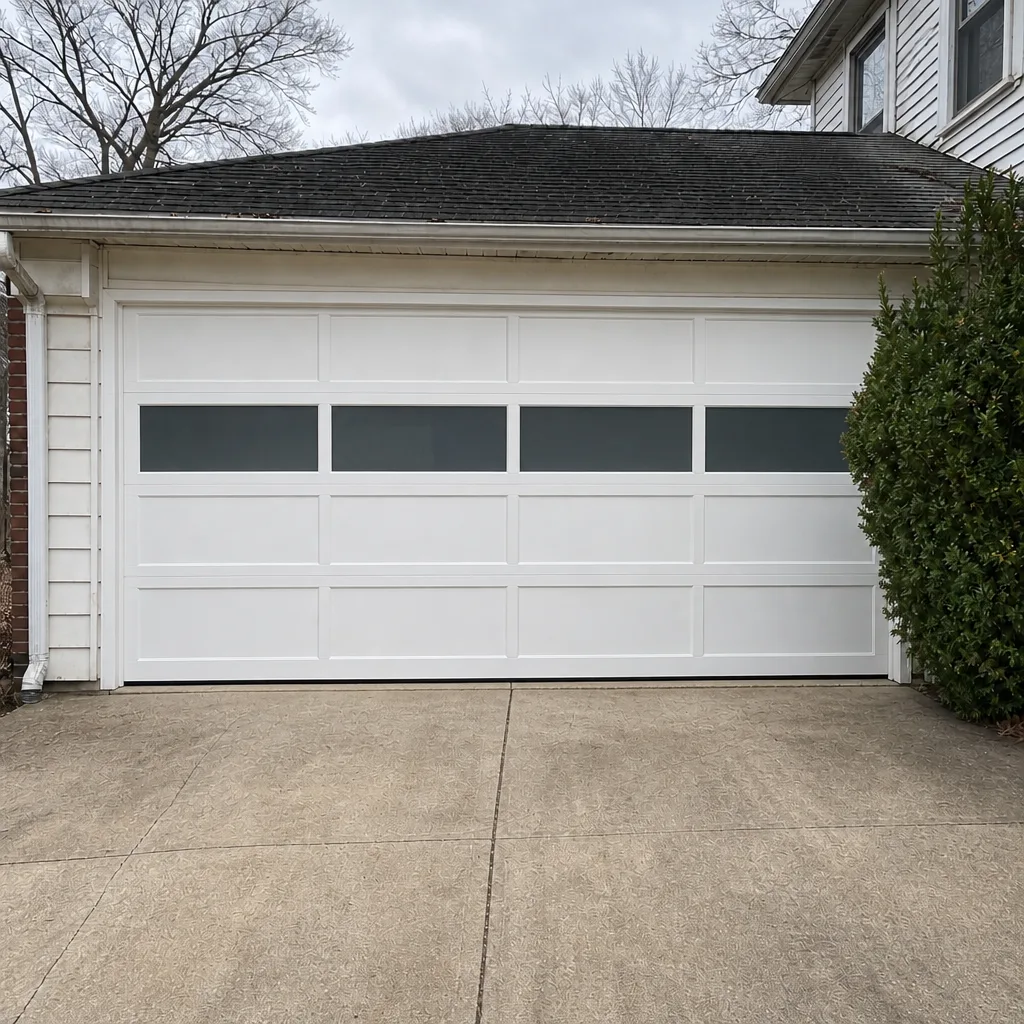 After
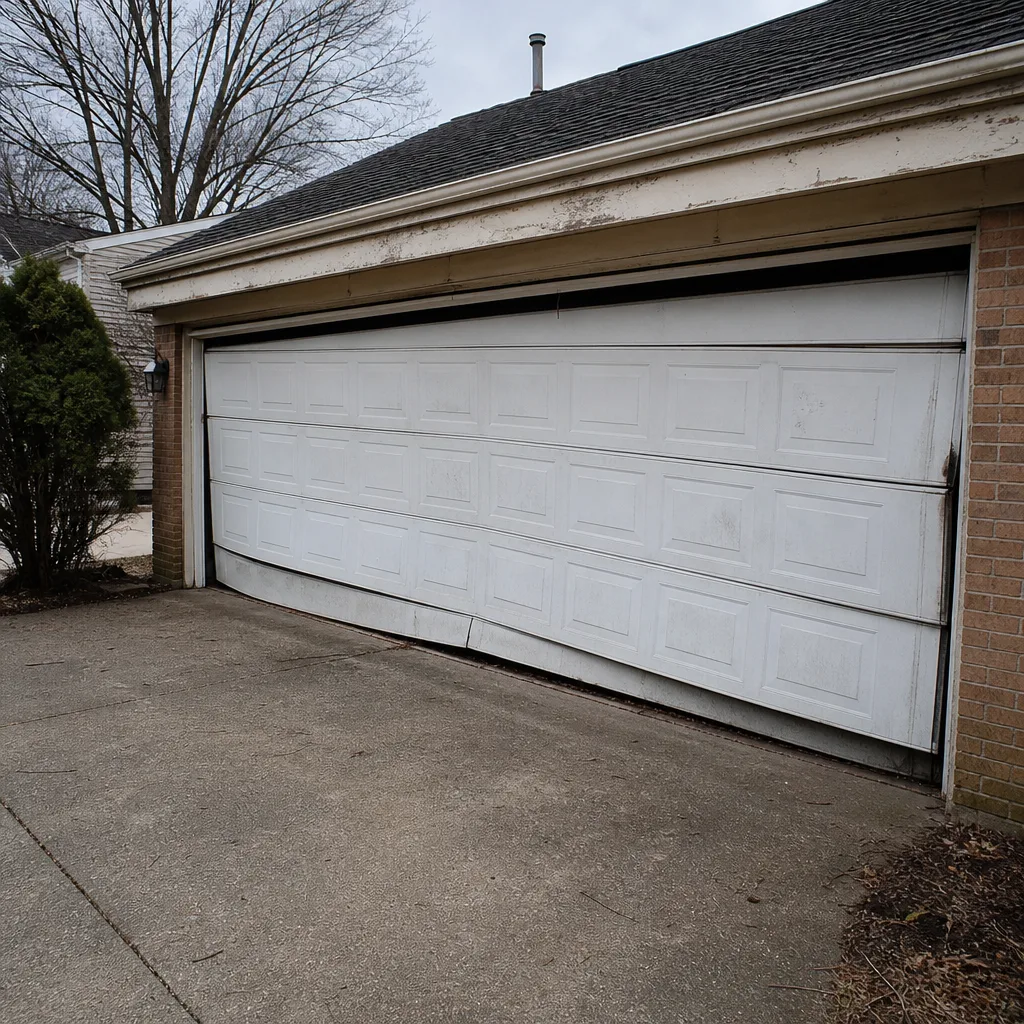 Before
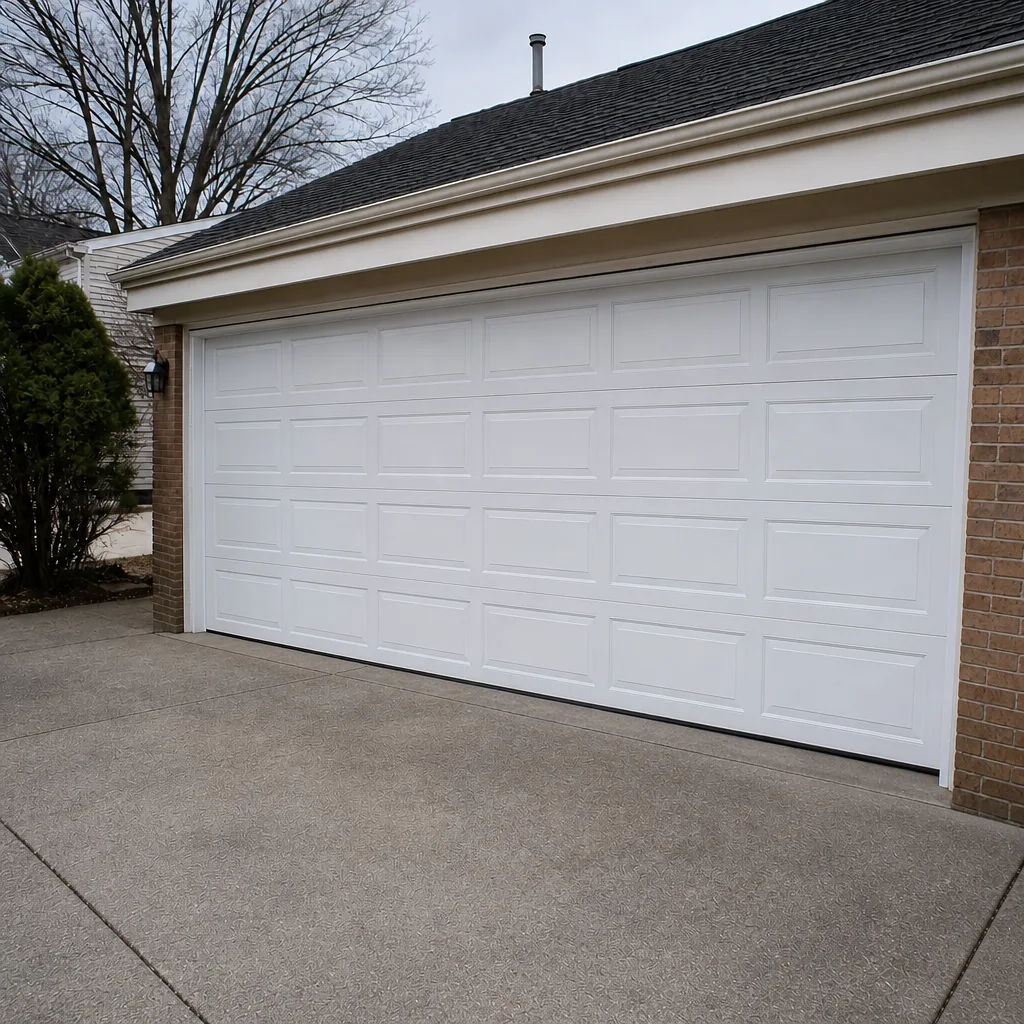 After
Seasonal Patterns Worth Knowing in Laurel
Garage doors tell you a lot about the season. Laurel sees real cold snaps in the winter and hot humid spells in the summer, and both push different components.
Winter is the high season for spring failures. Cold makes metal more brittle and thickens lubricants, so a tired spring that lasted all fall tends to let go on a cold morning. If your door starts running slower in December and January and then springs back, that’s a seasonal consequence, not a temporary glitch. The tired spring is still tired come February. If a door won’t lift at all on a cold morning, that usually means a spring has snapped, which is where emergency garage door service becomes the priority, and we treat it as such.
Summer humidity is the season of rusty rollers and swollen weatherstripping. Doors that ran fine in April start to scrape in July. That’s the year’s cue to inspect cables and drums, because humidity accelerates rust on hardware that’s already showing wear. The rust patterning we covered earlier shows up faster in a humid summer, and Laurel’s summers are humid enough to matter.
Spring and fall are for the visual checks and the balance test. If you annualize the checks by season, you’ll catch most issues before they turn into a service call.
Common Mistakes to Avoid
These are the mistakes we see most often when a homeowner calls after something has gone wrong. Most are avoidable with a little attention.
- Assuming a reversing door means bad sensors. In our experience it’s usually a spring or cable tension issue. Moving the sensors doesn’t fix a mechanical problem, and the reversing comes back.
- Ignoring a half-second hesitation. That hesitation is a measurable sign of load increase. Three months of hesitation is the path to a cable-and-drum replacement.
- Lubricating a spring that needs replacing. Lubricant helps moving parts, not broken ones. If the spring is sagging or cracked, lubrication won’t help and can mask the sign.
- Adjusting torsion springs yourself. This is the most dangerous part of the trade. The stored force can cause serious injury. Call a technician instead. In Laurel, our technicians have up to 10 years of experience on this exact job.
- Replacing the opener when the door is the problem. A new opener pushing a tired door fails just as fast. Fix the door first, then evaluate the opener.
- Skipping the manual balance test. It takes ten seconds and tells you more about spring health than any visual check.
- Calling a general handyman for spring work. Springs are a specialist repair, not a general home repair. A single-trade garage door specialist has the tools and knowledge specific to this job.
When to Call a Professional
Some signs can wait for a scheduled visit. Others can’t. The ones that can’t are straightforward: a snapped spring, a frayed cable, a door that’s hanging off a track, a door that won’t open at all, and any sign of the 80 percent rust patterning on torsion hardware. In those cases, stop using the door, don’t try to force it, and call for emergency garage door service. A stuck-open door or a broken spring blocking your car is exactly the kind of thing you can’t leave until next week. Laurel Garage Door Repair Pros offers free estimates in Laurel – call (855) 337-2016. We work on the brand you already have, and our technicians have up to 10 years of experience on doors and openers from the major brands. When your garage door won’t move, we move fast.
Frequently Asked Questions
A half-second hesitation before the door moves. It’s easy to dismiss as “the door getting old,” but it’s a measurable sign that the motor is working against increasing resistance from the springs or cables. Call (855) 337-2016 for a free estimate if you notice it.
No. Torsion springs are under enough stored force that an incorrect adjustment can cause serious injury. The right approach is a trained garage door specialist. Our technicians have up to 10 years of experience with spring work. Call (855) 337-2016 for an exact quote.
Typical spring repair costs in the Laurel market depend on the door and the spring type, and we work per job by estimate rather than publishing a single figure. A single spring replacement is priced separately from a matched pair, because pairs are usually replaced together. The written estimate sets the final price, and it’s provided before any work starts. Call (855) 337-2016 for an exact quote.
No. In our experience, a door that reverses at the same point every time is more often a spring or cable tension problem than a sensor issue. A trained technician can confirm the cause in minutes. Call (855) 337-2016 for a free estimate.
The local professionals we connect you with are licensed and insured as the state requires, and work to current codes. Estimates are free and the price is quoted before any work starts. Call (855) 337-2016 for an exact quote.
For urgent situations like a stuck-open door or a broken spring blocking your car, yes. Emergency garage door service is a dedicated offering, not an afterthought, and we work to get to you quickly. Call (855) 337-2016 to confirm availability.
The Bottom Line
The garage door warning signs that matter most are the quiet ones: the half-second hesitation, the long-cycle opener, the reversing door misdiagnosed as a sensor problem, and the rust patterning on older torsion hardware. Visible cracks and loud noises are late-stage symptoms. Catching the subtle signals early is what keeps a small adjustment from becoming a major repair. In Laurel, our local door stock and seasonal swings make these checks worth doing a few times a year. Our technicians have up to 10 years of experience, we work on the brand you already have, and we offer free estimates on every job.
Call (855) 337-2016 for a free estimate. The price is quoted and agreed before any work starts.
Written by the team at Laurel Garage Door Repair Pros.